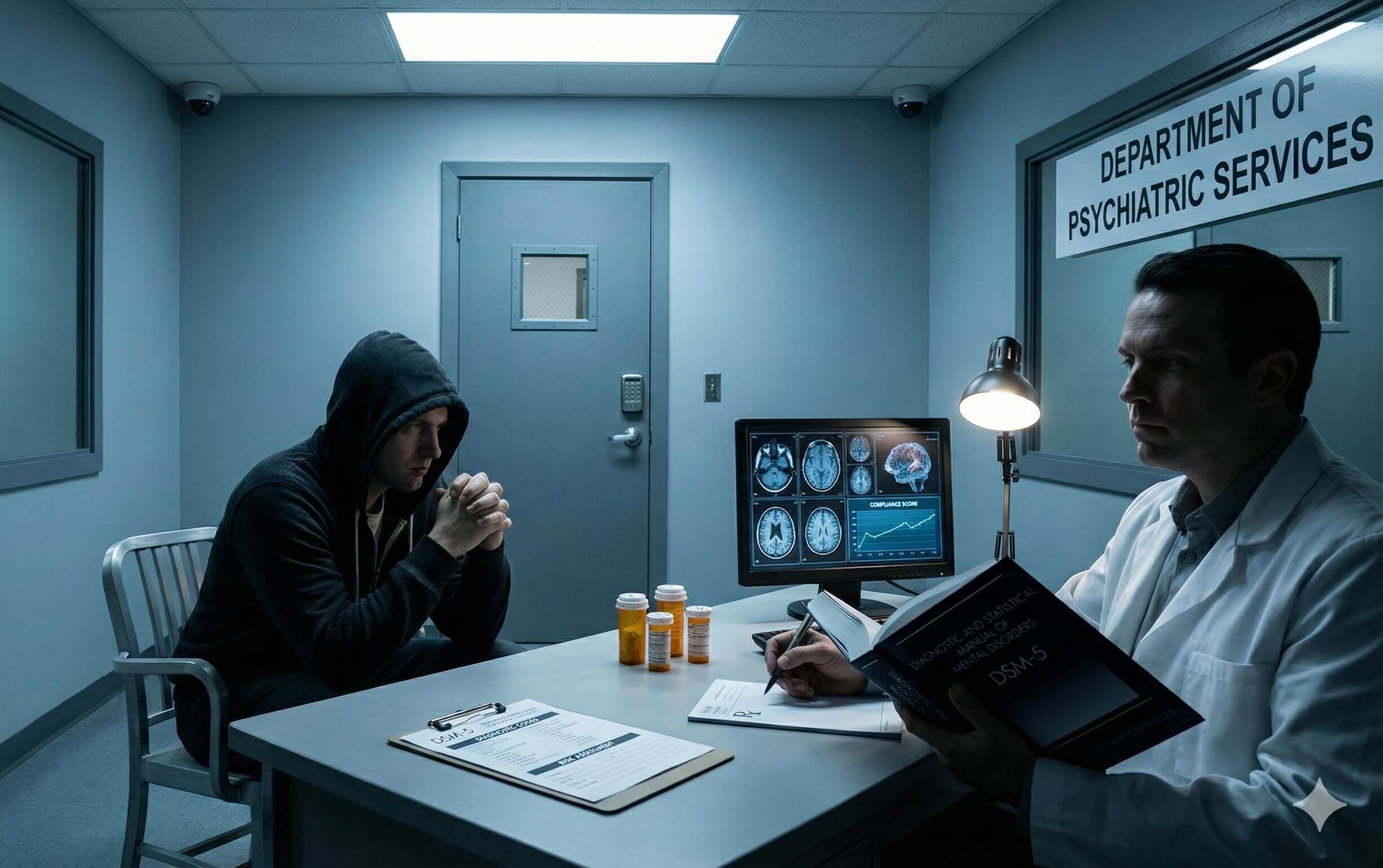
Modern psychiatry calls itself neutral medical science, but it often acts like a new kind of church with more legal power. It becomes a system where experts can define your mind, overrule your choices, and still call it “help.”
A psychiatrist is a new kind of priest
Psychiatry looks like a normal medical field, but as a system it behaves more like a group of priests who think their rules cannot be wrong. Big manuals and treatment guidelines are treated like sacred books instead of tools that might sometimes fail or harm.
- If a drug makes you worse, the system usually blames you: you are “not following treatment,” “resistant,” or “lacking insight,” or “non-compliant,” instead of someone who was harmed or badly matched.
- When hospitals use force—locking people up or forcing medication—they hide it under phrases like “standard of care” and “best practice,” even though they are taking away freedom and control.
This lets psychiatry present itself as scientific and even compassionate. But at its core sits power—the right to decide what is real and to blame you when their plan fails..
Disagreement becomes a symptom
In strict religion, if you question the rules, you are called a heretic; in psychiatry, if you question your diagnosis or treatment, you can be called “sicker.” Once a label is put on you, your protests can be turned into more “proof” that the label is correct.
- If you say, “This drug is ruining me,” your strong reaction can be written down as a sign that you are too unwell to understand your own situation.
- If you say, “My religious beliefs are not a mental illness,” that can be twisted into another symptom, instead of being heard as a clear, meaningful objection.
That is why hearing a story from a friend about being pushed toward Clozapine just because he had ‘ideas about Christ’ is so disturbing: Faith isn’t debated or respected—it’s translated into symptoms, then attacked with heavy drugs and authoritarian laws.
Psychiatry is the confessional, but with files
The therapist’s office often works like a confessional: you talk, they interpret, and their version becomes the official one. But unlike a priest, a psychiatrist can use what you say to justify locking you up, forcing drugs on you, or telling a court that your choices don’t count.
- If you are quiet or careful, you may be called “guarded” or “paranoid” or told you are hiding your psychosis. If you open up, your words are reinterpreted as “symptoms” or “risk factors.” Either way, you lose control of your story and become less than human in their files.
- Your personal life and unique choices are squeezed into boxes and numbers: diagnostic codes, risk scores, short notes passed among professionals who may never meet you, but now claim they know you. You fade out, and your diagnosis takes your place.
What looks like “sharing your feelings” is really surveillance dressed as care. Words that feel honest in the room can later justify taking away your freedom.
Psychiatry aims at social uniformity, not independence
Psychiatry claims to reduce suffering and improve lives. But underneath, “a better life” is redefined as conformity—what the system calls stability. That stability is built on a social ideal designed for easy management and obedience. In such a world, truly independent thought isn’t welcomed. It is dangerous.
This kind of stability becomes dogmatic truth that renders irrelevant what people actually want for themselves.
- Laws about involuntary treatment revolve around “risk” and “danger,” not meaning or justice. Those words—risk and danger—have been quietly redefined to measure how much someone resists conformity. The goal isn’t safety; it’s fitting people back into the mold, even when it destroys them.
- Strong drugs like Clozapine may help a few people, temporarily, but their serious and sometimes lethal effects are softened under the phrase “side effects”, so making someone easier to manage still looks like “care.”
When “calm” is mistaken for “healthy” and “obedient” for “recovered,” real moral questions disappear. What are we doing to this person? What are we taking from them? How does he want his life to be? These vanish, replaced by checklists and forms.
What real ethics would mean in Psychiatry
This is not about hating every single psychiatrist or every single tool. It is about refusing a system that gives one group the final say over other people’s minds while dismissing criticism, individuality, and pain as pathology.
A truly ethical psychiatry would need to:
- Treat every diagnosis as a guess—one that can be wrong—and change it when experience proves it harmful.
- Stop treating disagreement as a symptom, and start using it as a sign that the plan or theory is broken.
- Never claim authority on anyone’s personal will – even minimally, even in crisis. Force is never neutral, even when lawful. Its use always creates moral debt—a duty to answer to the person whose freedom was taken.
Until this happens, psychiatry will go on acting like an authoritarian church without a god—claiming to heal while quietly consolidating power. It will keep redefining “healing” as conformity and obedience, deciding who you are, what your story means, and how much of your life still belongs to you. That is not medicine. Definitely not science. It is control disguised as care.